ood’a thowt it
Ood’a thowt it engages with our relationship to the terrains we inhabit and the fragile structures which hold those relationships in balance.
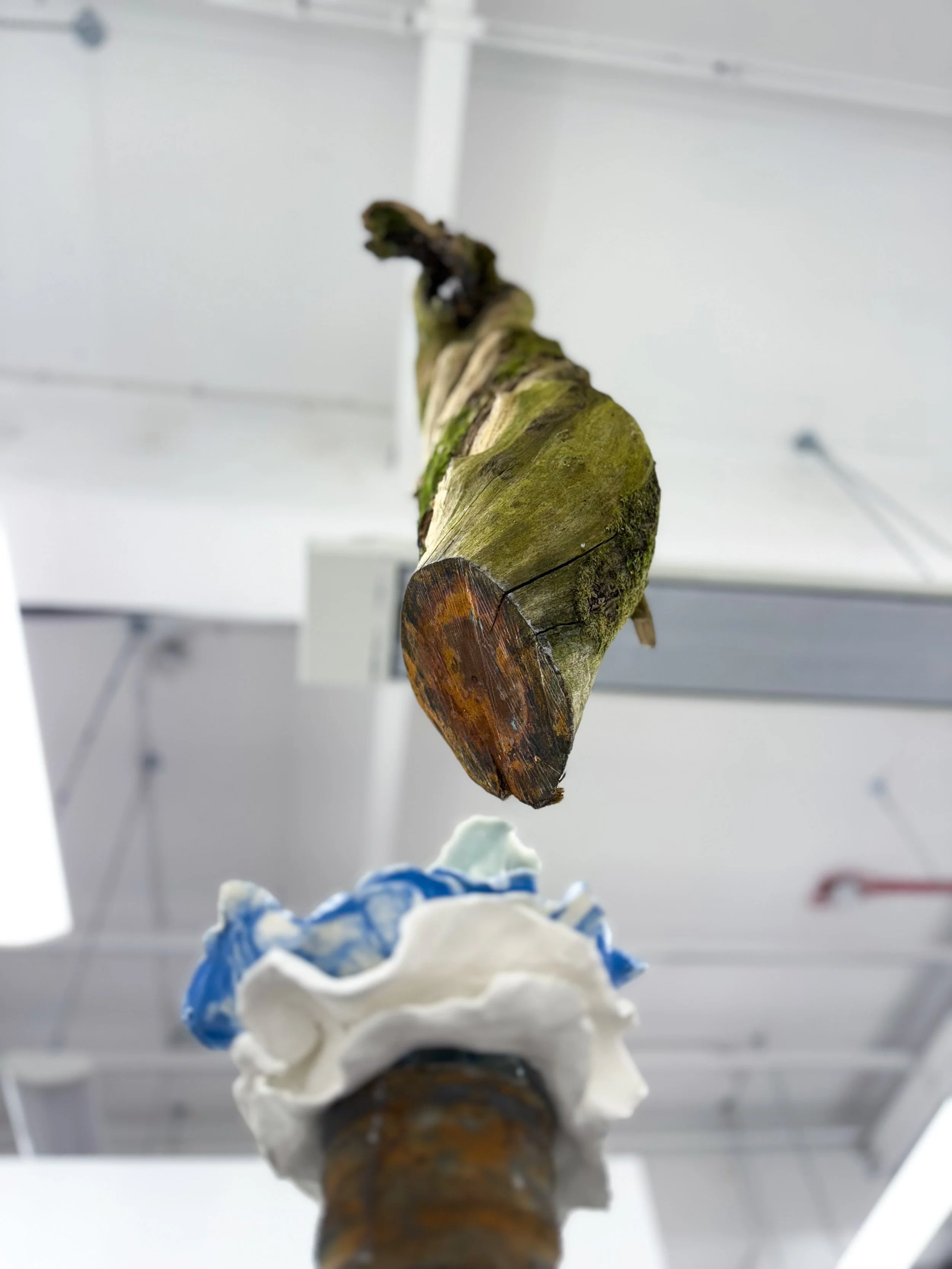
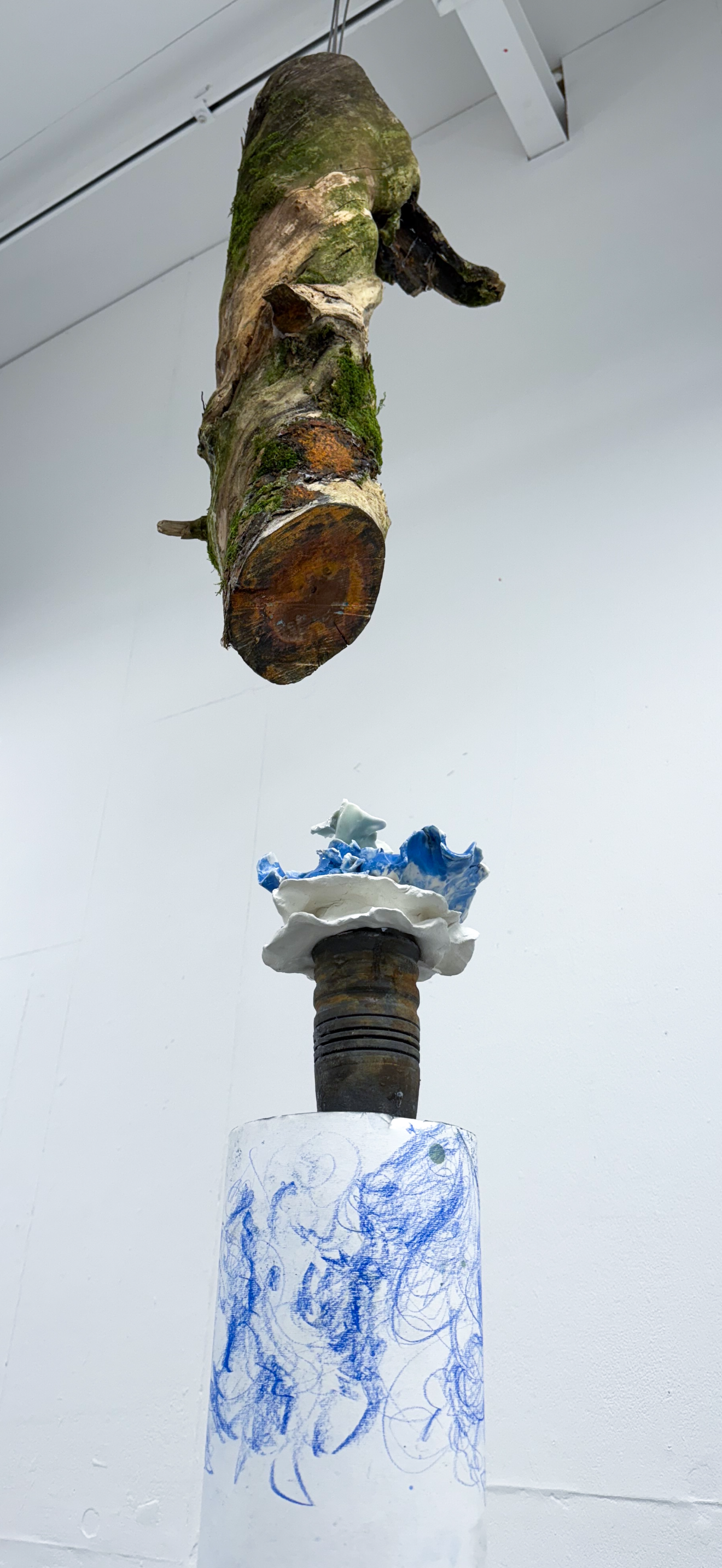
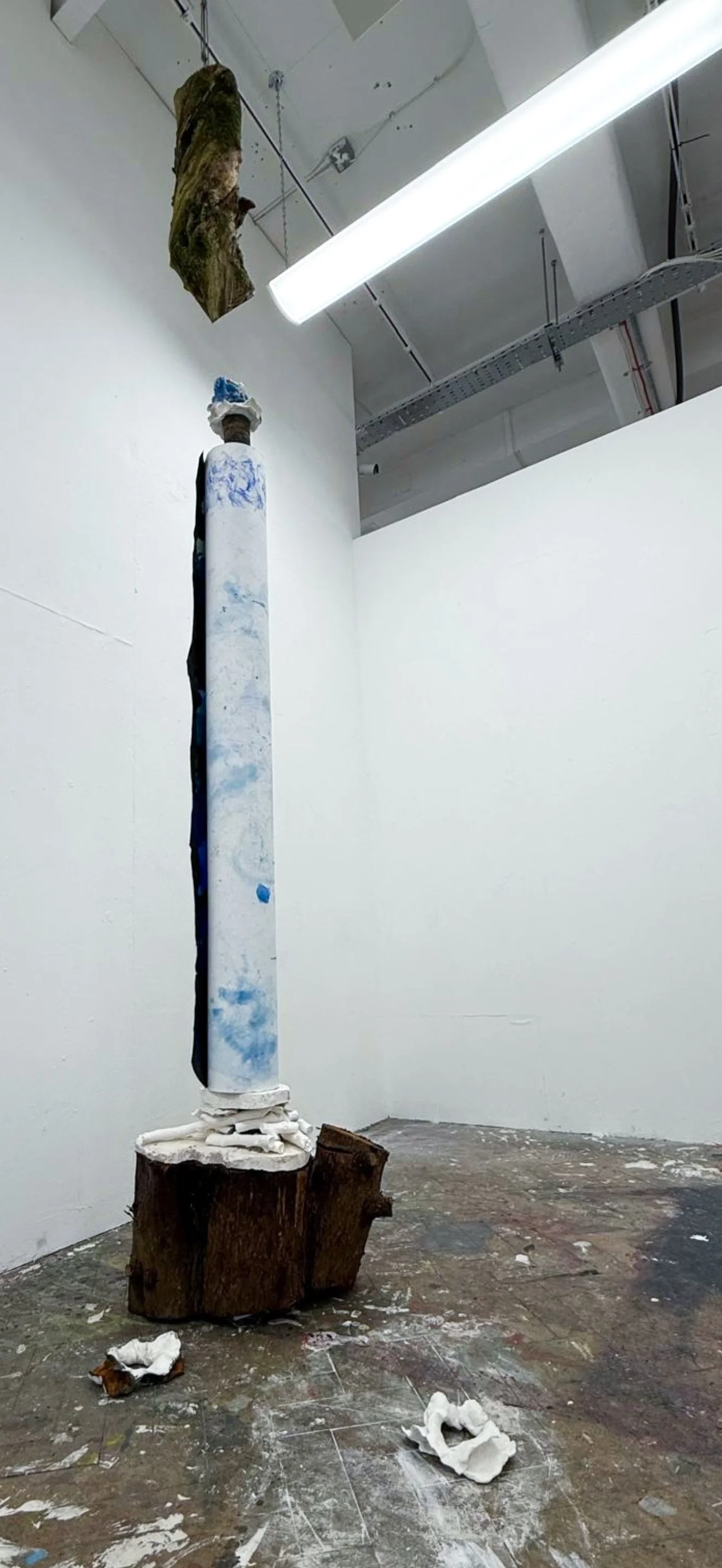
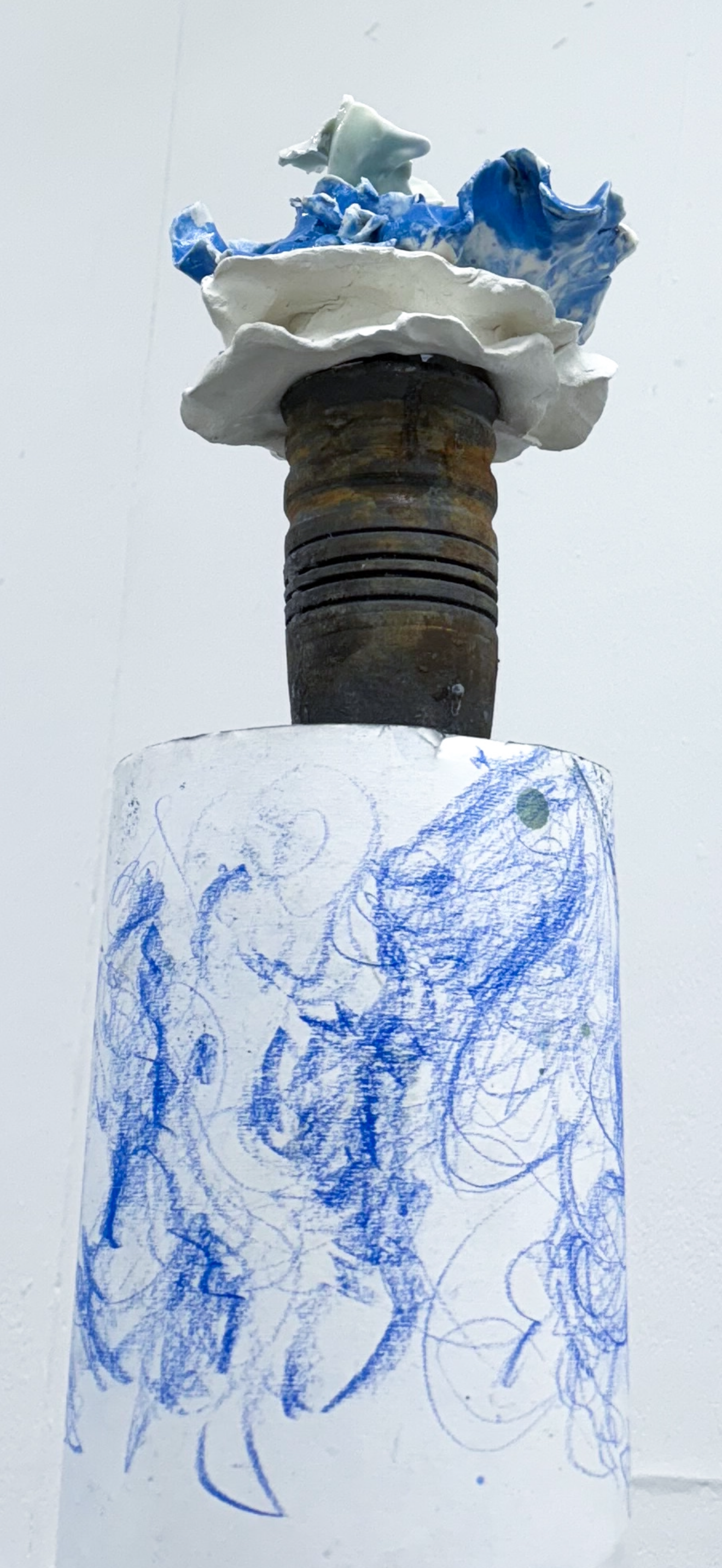
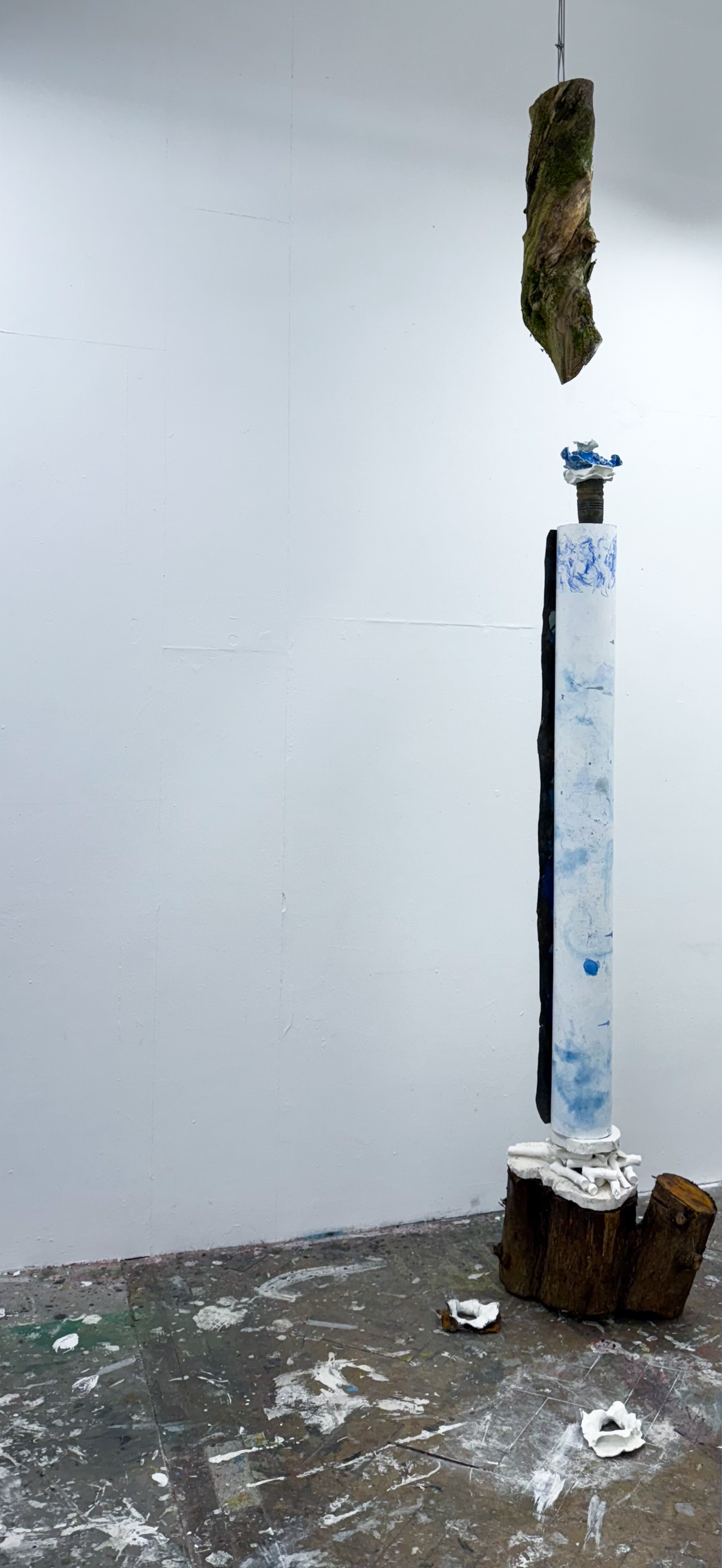
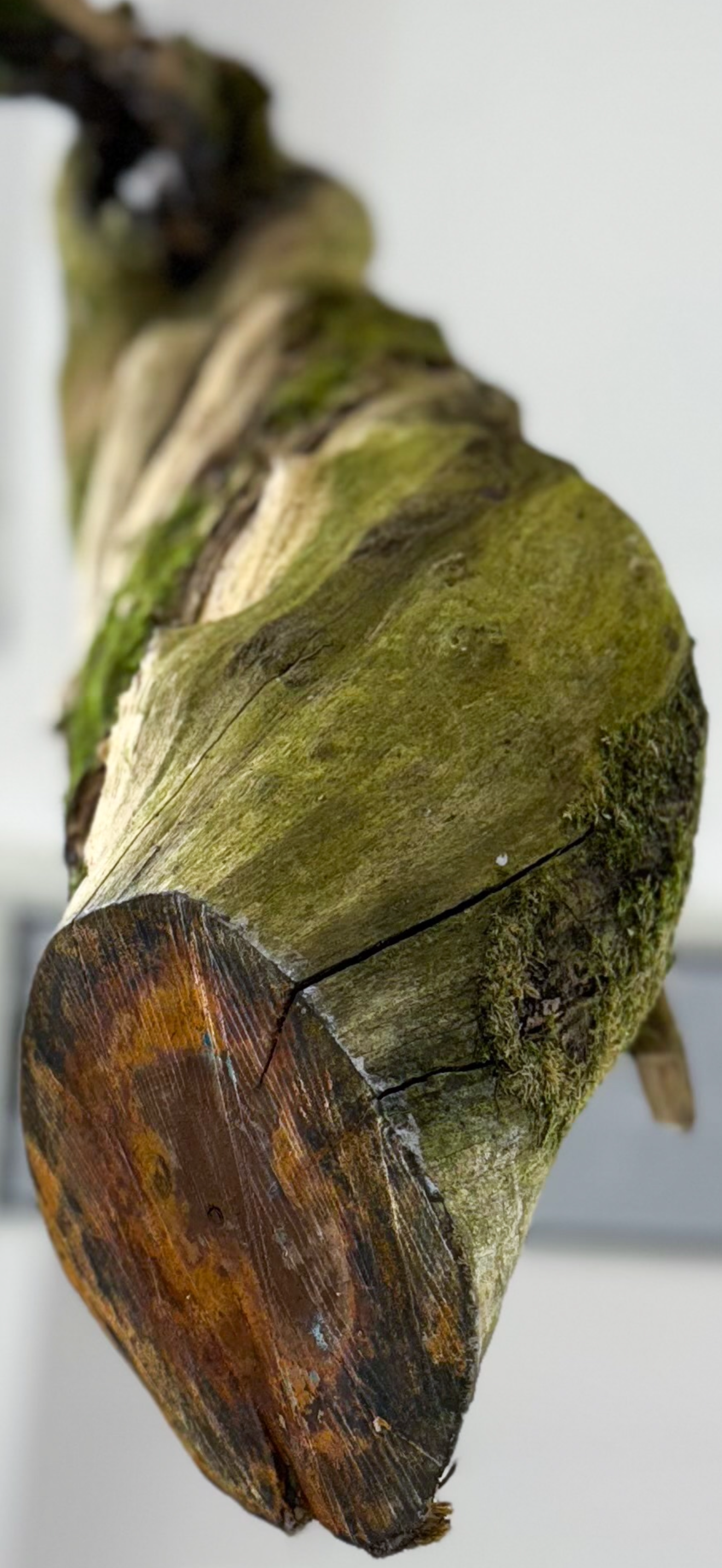
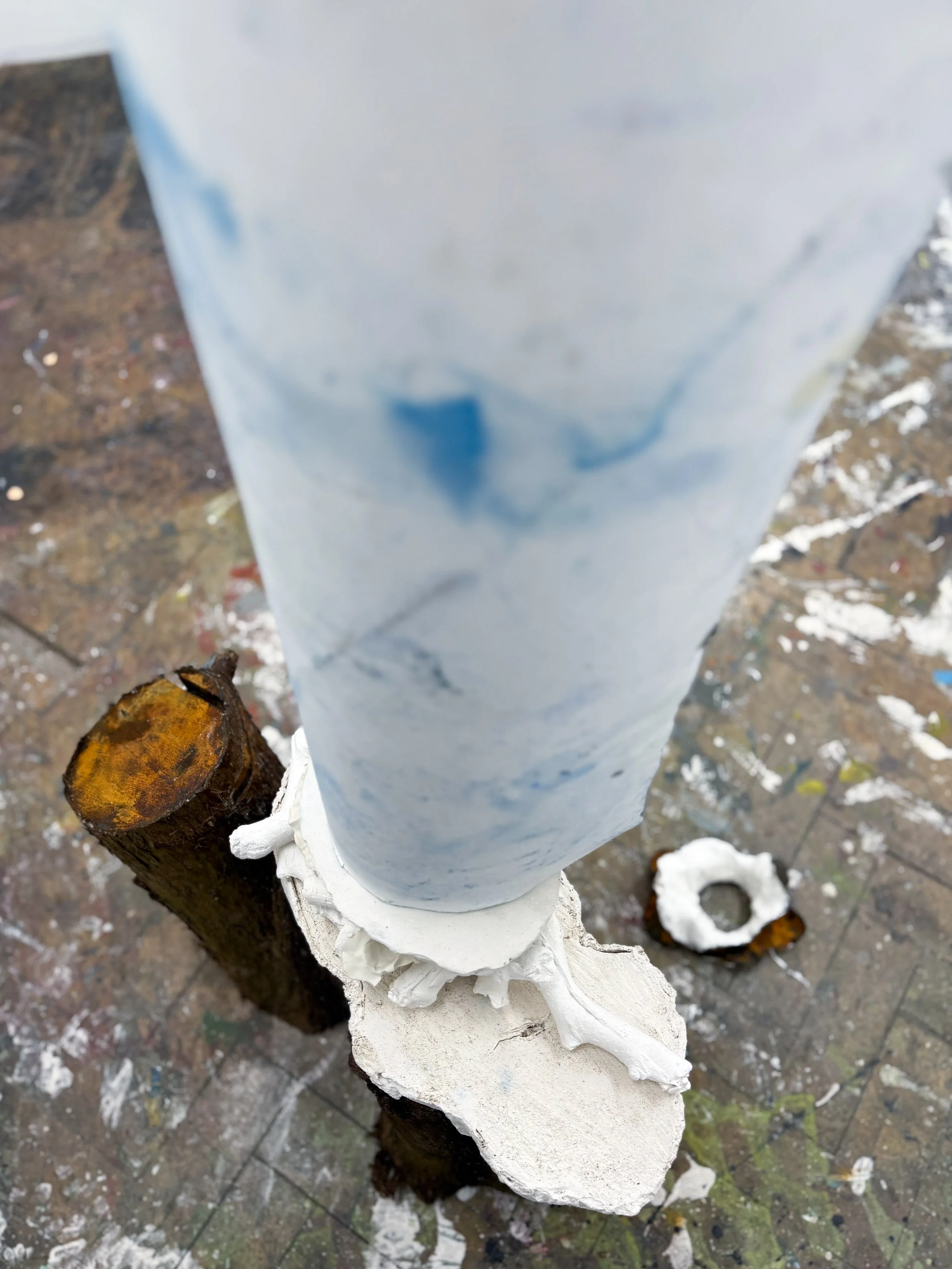
The drawing rises vertically, echoing the upward growth of trees, its fragmented elements interconnected and stabilised by a turned wooden spindle. This central support references historical forms and processes, drawing on influences from antiquity through the Renaissance and Baroque. Flourishes of elder wood, porcelain, and cast elements create points of tension and poise, upon which the work delicately balances. Together, these materials articulate a dialogue between human form, natural rhythm, and the precarious equilibrium which exists between them.
The work is structured around an upward movement, with the drawing extending vertically and held in place by a turned wooden spindle. This orientation echoes the growth of trees and the architectural logic of the column, drawing attention to how vertical structures organise both natural forms and human systems of support.
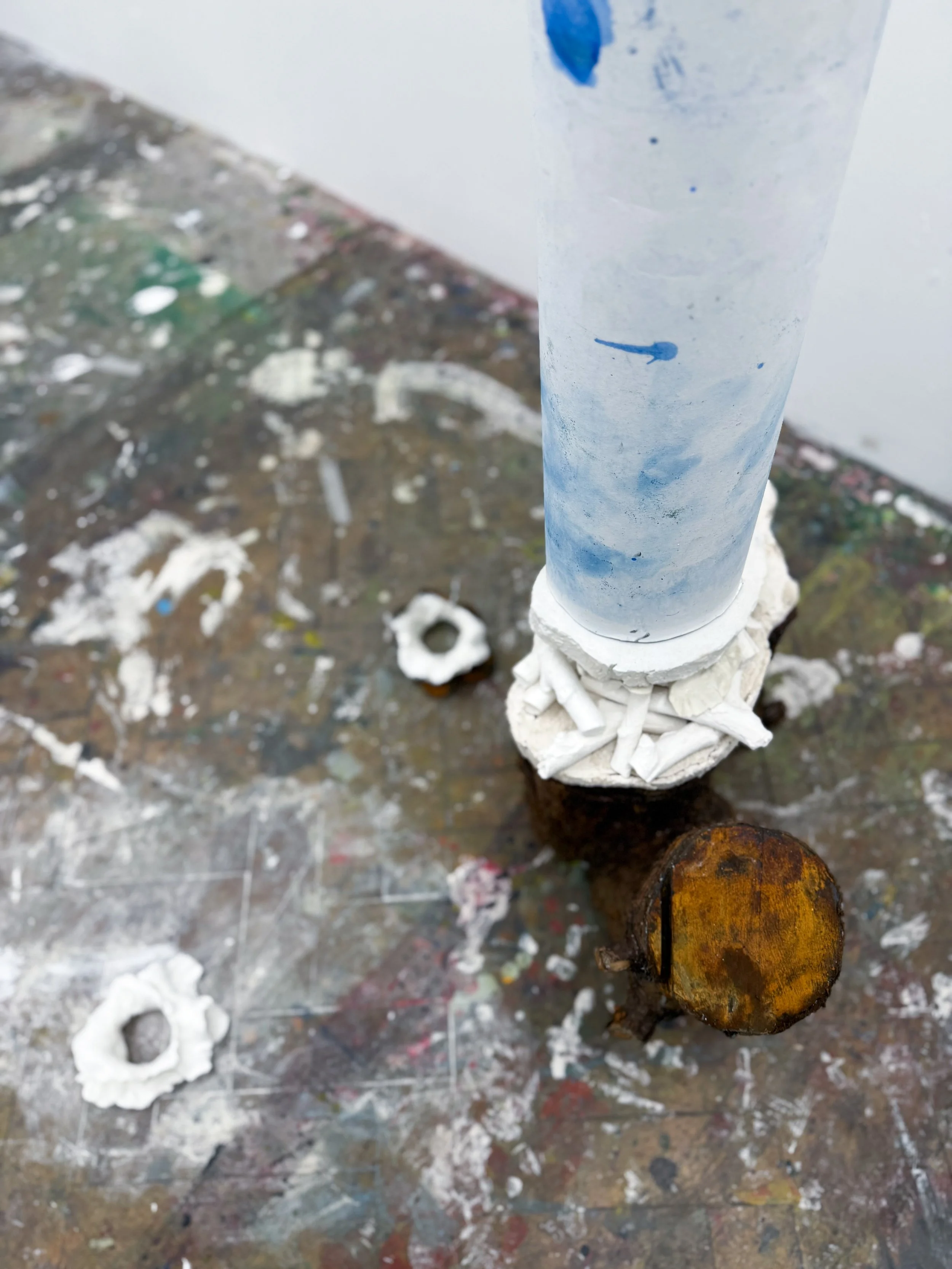
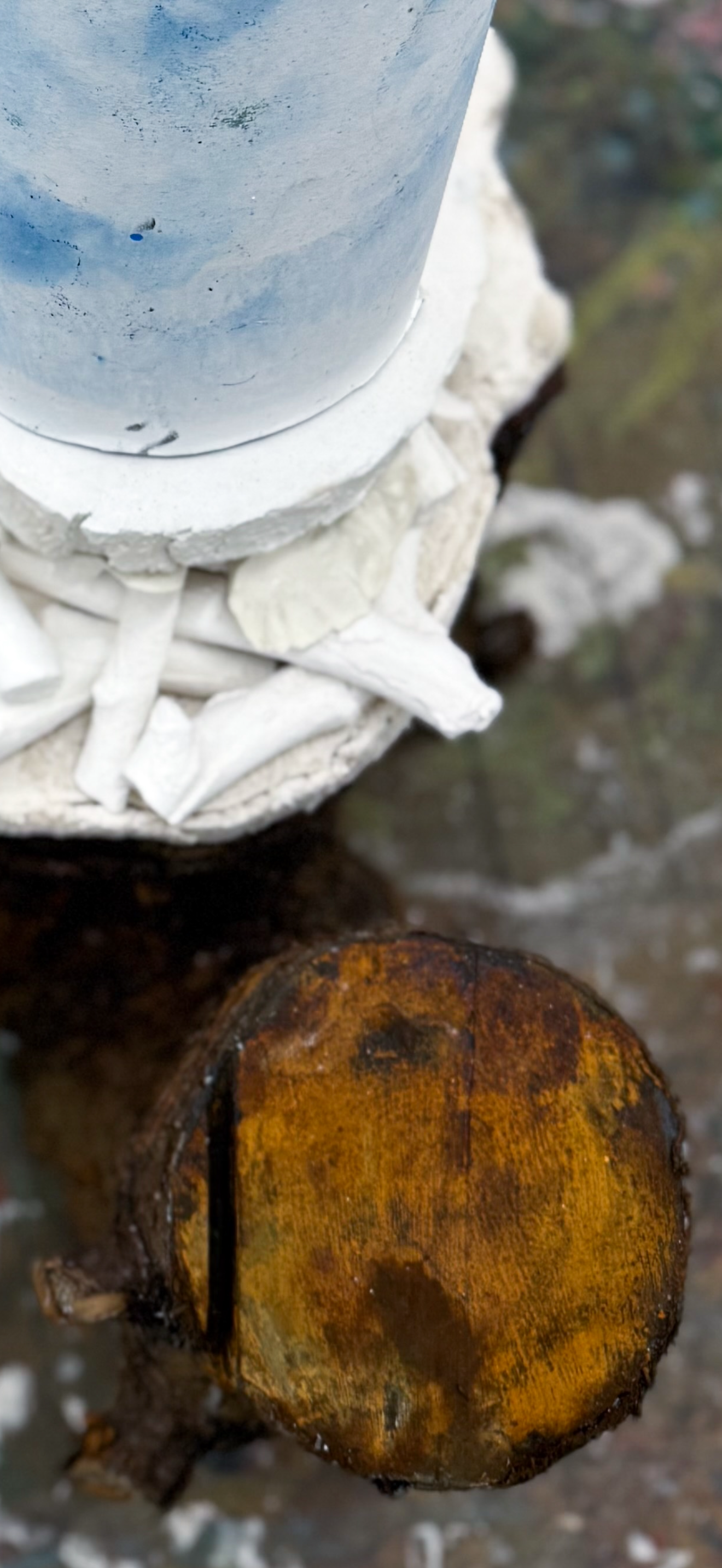
Ood’a thowt it is composed of multiple discrete elements — drawn, cast, and assembled, which are brought together without resolving into a seamless whole. The visible joins and interruptions emphasise a condition of fragmentation, where meaning emerges through connection, imbalance, and the negotiation between parts.
Materials including elder wood, porcelain, and cast components are altered through processes of making and assembly. These transformations foreground the work as an alchemical proposition, where changes in state, weight, and surface allow materials to shift from their original contexts into a new, provisional equilibrium.